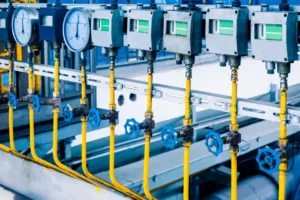
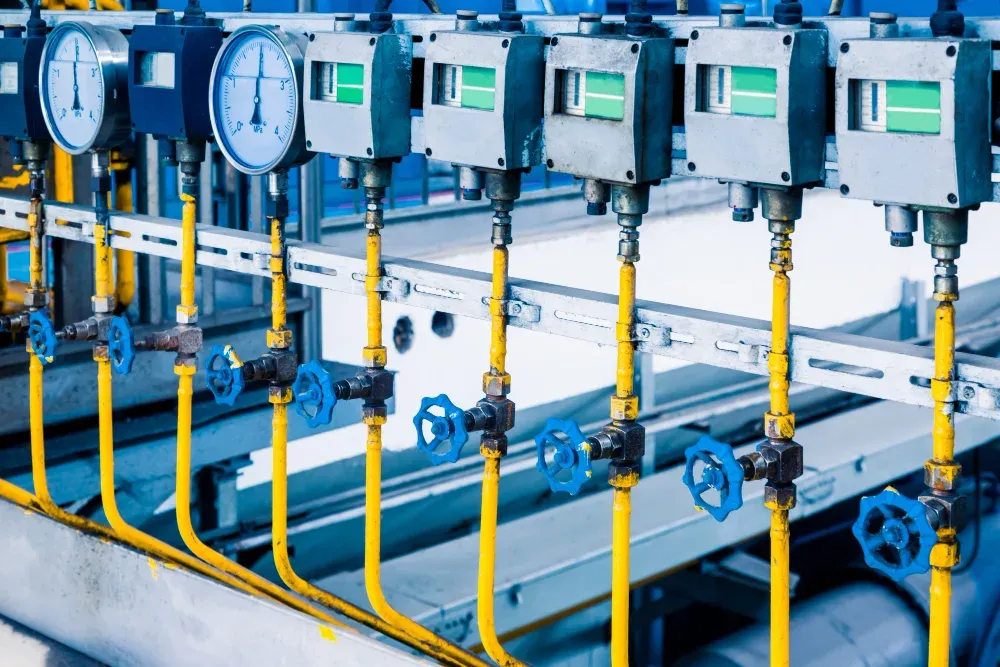
Pneumatic and hydraulic systems are fundamental to modern industrial automation, machinery, and process control. While both are used to transmit power and control motion, they operate on entirely different physical principles—compressed air versus pressurized fluid. The choice between them is not interchangeable; it directly impacts efficiency, precision, safety, maintenance, and long-term operational costs.
Understanding the deeper engineering differences between pneumatic and hydraulic systems is essential for selecting the right technology for specific industrial applications.
Fundamental Working Principles
Pneumatic systems use compressed air or gas to generate motion and force. Air is compressed using compressors and then directed through valves and actuators to perform work. Because air is compressible, pneumatic systems are inherently elastic in behavior.
Hydraulic systems, on the other hand, use incompressible fluids (usually oil) to transmit force. Pressure applied at one point is transmitted uniformly throughout the fluid, enabling precise and powerful movement based on Pascal’s Law.
This fundamental difference—compressible vs incompressible medium—is the key factor that defines performance characteristics in both systems.
Force Generation and Power Density
Hydraulic systems are significantly superior when it comes to force generation. Because liquids are incompressible, hydraulic systems can generate extremely high forces even with relatively small components.
This makes hydraulics ideal for heavy-duty applications such as presses, lifting systems, construction equipment, and industrial machinery where high load capacity is required.
Pneumatic systems, in contrast, operate at lower pressures and produce comparatively lower force. They are better suited for lightweight applications such as assembly lines, packaging, and automation tasks where speed is more important than force.
Precision and Control Characteristics
Hydraulic systems offer superior precision and smooth control. Since the fluid is incompressible, movement can be controlled with high accuracy, making hydraulics suitable for applications requiring fine positioning and consistent force.
Pneumatic systems, due to air compressibility, are less precise. The presence of air compression and expansion introduces variability in motion, making it difficult to achieve exact positioning without advanced control systems.
For applications such as CNC machinery, heavy presses, or controlled lifting, hydraulics are preferred. For repetitive, high-speed operations with less emphasis on precision, pneumatics are more efficient.
Speed and Response Time
Pneumatic systems excel in speed. Air can be compressed and released quickly, allowing rapid actuation and high cycle rates. This makes pneumatics ideal for automation systems where quick repetitive motion is required.
Hydraulic systems, while powerful, are generally slower due to fluid movement and system inertia. However, they provide smoother and more controlled motion, which is critical in heavy-duty applications.
In industries like packaging and assembly, pneumatic systems offer a clear advantage due to their speed and responsiveness.
Energy Efficiency and Losses
Energy efficiency differs significantly between the two systems. Pneumatic systems tend to be less efficient due to energy losses during air compression and leakage. Compressed air systems can lose a considerable amount of energy through heat and pressure drops.
Hydraulic systems are generally more efficient in terms of power transmission, as fluids do not compress and energy loss is minimal during transfer. However, inefficiencies can arise from fluid friction and leakage in poorly maintained systems.
From an energy perspective, hydraulics are more efficient for high-power applications, while pneumatics are suitable for lighter operations where energy loss is less critical.
Maintenance and Reliability
Maintenance requirements vary significantly between pneumatic and hydraulic systems.
Pneumatic systems are relatively simple and clean. Since they use air, there is no risk of fluid contamination or leakage causing environmental damage. Maintenance mainly involves ensuring proper air filtration and moisture control.
Hydraulic systems require more rigorous maintenance. Fluid leaks, contamination, and temperature control are critical factors. Even minor contamination in hydraulic fluid can lead to system failure or reduced performance.
While hydraulics offer high performance, they demand disciplined maintenance practices to ensure reliability.
Safety Considerations
Safety is a major factor in system selection.
Pneumatic systems are generally safer because air is non-flammable and does not pose environmental hazards. Even in case of leaks, there is minimal risk to operators or surroundings.
Hydraulic systems operate under high pressure and use oil, which can be flammable and hazardous if leaks occur. High-pressure fluid injection injuries are also a risk in poorly maintained systems.
For environments where safety and cleanliness are critical, pneumatics are often preferred.
Environmental Impact
Pneumatic systems are environmentally cleaner, as they use air as the working medium. There are no disposal concerns or contamination risks associated with air leaks.
Hydraulic systems, however, involve oils that can cause environmental damage if leaked or improperly disposed of. Modern systems use biodegradable fluids, but environmental considerations still remain significant.
Industries with strict environmental regulations often lean towards pneumatic solutions where feasible.
System Complexity and Installation
Pneumatic systems are simpler in design and easier to install. They require fewer components and are generally more flexible in layout.
Hydraulic systems are more complex, involving pumps, reservoirs, filters, and precise fluid control mechanisms. Installation requires careful planning and expertise to ensure proper functioning.
This complexity makes hydraulics more suitable for specialized applications, while pneumatics are ideal for scalable and modular systems.
Industrial Applications of Pneumatic Systems
- Automation and assembly lines
- Packaging and labeling machines
- Material handling and sorting systems
- Food and pharmaceutical processing
- Light-duty manufacturing operations
Pneumatics are preferred where speed, cleanliness, and simplicity are required.
Industrial Applications of Hydraulic Systems
- Construction and heavy machinery
- Hydraulic presses and forming machines
- Injection molding equipment
- Mining and material extraction
- Industrial lifting and load handling systems
Hydraulics are the preferred choice where high force and precision are critical.
Cost Considerations
Initial setup costs for pneumatic systems are generally lower, but operational costs can be higher due to energy losses in air compression.
Hydraulic systems have higher initial costs due to complexity and components, but they offer better efficiency for high-load applications, making them cost-effective in the long run.
The total cost of ownership depends on application requirements, operating conditions, and maintenance practices.
Choosing the Right System
The choice between pneumatic and hydraulic systems should be based on:
- Required force and load capacity
- Precision and control requirements
- Speed of operation
- Environmental and safety considerations
- Maintenance capabilities
- Cost and efficiency requirements
There is no one-size-fits-all solution. Each system has its strengths and limitations, and the optimal choice depends on the specific industrial application.
Avenue Traders – Supporting Industrial System Requirements
Avenue Traders supplies a wide range of pneumatic and hydraulic components, including fittings, hoses, and system accessories. With a focus on industrial requirements and reliable supply, Avenue Traders supports businesses in selecting the right components for efficient system performance.
By offering solutions across both pneumatic and hydraulic systems, Avenue Traders helps industries achieve optimal balance between performance, efficiency, and cost.
Conclusion
Pneumatic and hydraulic systems serve distinct roles in industrial applications. Pneumatics offer speed, simplicity, and safety, while hydraulics provide unmatched power and precision.
A clear understanding of their differences allows businesses to make informed decisions, optimize performance, and ensure long-term operational reliability. Selecting the right system is not just a technical choice—it is a strategic decision that impacts productivity, safety, and cost efficiency.